|
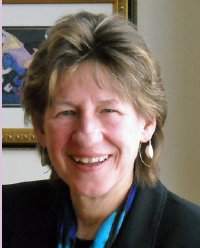
Dr
Wetherford
is a licensed clinical psychologist who has served as a core faculty
member at the California School of Professional Psychology (CSPP),
worked in community mental health, and maintained a busy private
practice for 30 years.
She has developed a timely specialization in helping people improve
their relationships with money, as individuals and as members of a
couple, family or community.
|
Money
is a most powerful symbol of value in our society, and feelings about
money evoke more stress for most people than any other single thing.
Yet we have all experienced the taboo against openly talking about it,
because we sense that to do so may be dangerously revealing of aspects
of our self esteem that are more comfortable hidden.
In this workshop, Dr Wetherford will show how to
make talking about money issues less stressful and more enjoyable, so
that better money management can emerge.
|
|
Workshop
Activities:
1. Introduction of and historical approaches to the topic of money in
psychotherapy; the cultural/professional taboo against addressing money
by therapists.
2. Review of the concept of "money maturity" Therapist know thyself:
personal assessment tools for identifying areas
of avoidance or conflict in the therapist's money matters that likely
affect the therapy.
3. Money manifestations in the relationship between therapist and
client/patient. Money focus in individual psychotherapy. Guidelines and
experiential exercise/role playing.
4. Money management and conflict issues in couple therapy: tools and
tips. Structured exercises for couples.
5. Money issues in families: family of origin issues (how money is
triangulated in conflicts) and transfer of wealth guidelines..
6. Group discussion and practicing hypothetical situations with role
play.
|
Access
to Expertise:
1. This class is part of the CE at Alliant Access to Expertise
program. Registering and taking part in the class entitles
you to one Case Consultation at no charge with Dr Wetherford about a
issue related to the topic of the class.
2. A brief form for describing the issue and providing relevant
background will be provided at the class. Please
keep the focus of the consultation as specific as possible -- the Case
Consultation is limited to one-half hour.
3. The no-charge Access to Expertise consultation
should be requested within six months of attending this class.
4. The goal of the Access to Expertise
program is to continue support for using new skills into the real world
after the official training is over.
5. CE at Alliant will not be involved clinically or financially
in the no-charge Access to Expertise
consultation or subsequent case consultations, if any. The
only role of CE at Alliant is to enable access in a way that
strengthens the training we provide.
|